




South Tyrol in Four Senses
Discovering the Dolomites Beyond the Postcard
If you close your eyes and think of Italy, what comes to mind? Rolling vineyards in Tuscany, the sun-drenched Amalfi Coast, perhaps a plate of pasta and a glass of Chianti? For many UK travellers, Italy is a familiar friend. But tucked in its northernmost corner lies South Tyrol, a region that feels like another world entirely.

The Italy You Feel, Not Just See
The mighty Dolomites rise like cathedrals, piercing a sky so blue it seems almost surreal. But South Tyrol isn't just a place to see - it's a place to feel. To breathe in. To touch and taste. This is a destination that comes alive through your senses.
So, rather than another checklist of "must-sees," let's take a different approach. Let's explore South Tyrol through the senses, and discover why this under-the-radar gem might just be the Italy you didn’t know you were craving.
South Tyrol in Four Senses

Breath

Smell

Touch

Taste
Breathe: The Crisp Air of the High Alps

Step out of your hotel at sunrise and you'll understand immediately. The air here carries a freshness that feels almost medicinal. It's the kind of clean that fills your lungs and clears your mind.
In the early morning, mist clings gently to alpine meadows, slowly lifting to reveal a patchwork of wildflowers and snow-dusted peaks. One of the best ways to experience this is on a hike through the Alpe di Siusi, Europe's largest alpine plateau. The trails are well-marked and vary from gentle strolls to full-day hikes, with rustic huts along the way serving fresh strudel and mountain cheese.

If you're seeking quiet, the Dolomites offer it in spades. Try the Val di Funes, a valley so serene it feels untouched. The silence is profound. No cars, no crowds - just the occasional clink of a cowbell in the distance.
For a different kind of breathing space, take a cable car up to Seceda. At nearly 2,500 metres, you're truly on top of the world. From here, you can follow panoramic ridge paths with sweeping views across the Dolomites, the kind that imprint themselves on your memory.
Smell: Alpine Herbs, Pine Forests and Wood-Fired Saunas

There's a scent to South Tyrol that’s hard to define but impossible to forget. It lingers in the pine forests, in the herbal pillows placed gently on your spa bed, in the steam rising from a sauna built of mountain spruce.
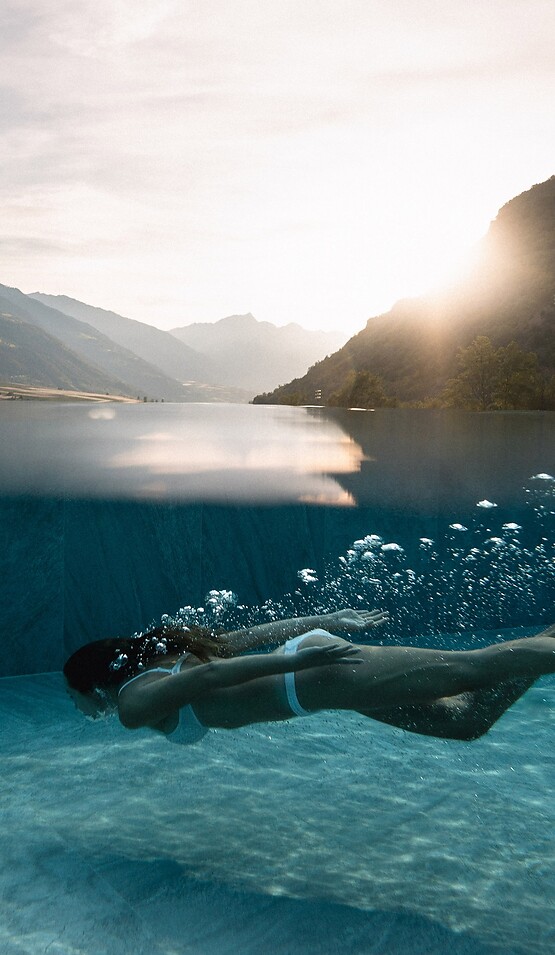
Wellness is deeply rooted in South Tyrolean culture, not as a luxury but a lifestyle. Many of the region's hotels, including the Dolce Vita Hotels collection, take their cues from nature. Think outdoor saunas with views of the peaks, infinity pools surrounded by larch trees, and treatments using locally foraged herbs like arnica, mint and calendula.

Venture into the forests and you'll notice the air change. The Japanese call it "forest bathing," but here it's simply life. Pine needles underfoot, the musky aroma of moss, the subtle sweetness of wildflowers. Try a guided herb walk near Merano, where local experts will introduce you to the plants used for everything from teas to tinctures.
Even the local food carries this fragrance-forward experience. In autumn, the air fills with the scent of roasted chestnuts during Törggelen season, a traditional harvest-time celebration featuring smoky meats, sauerkraut and new wine.
Touch: Rock, Water, Wool and Wood

There is something grounding about the textures of the Dolomites. The smooth, cool rock beneath your hand as you pause on a trail. The soft crunch of gravel underfoot. The tingle of glacial water when you dip your toes into a mountain stream.
At the heart of the region's wellness offering is water. South Tyrol is known for its mountain springs and thermal waters, particularly around Merano. Spend a day at the Terme Merano spa, where you can float in mineral-rich pools both indoors and out, surrounded by palm trees and snowy peaks.

Back at your hotel, you might wrap yourself in locally made wool after a sauna session. South Tyrol has a rich tradition of craftsmanship. Look out for hand-woven textiles, wood carvings, and loden wool clothing made in traditional workshops. Many of these make for beautiful, practical souvenirs that connect you to the landscape.
And then there's the simple pleasure of wood: smooth pine panelling in your bedroom, the grain of a hand-carved bench, the creak of floorboards in a 200-year-old mountain hut. Here, nature isn’t just something to look at - it’s part of how you live.
Taste: A Culinary Crossroads of Italy and Austria

Perhaps the most surprising thing about South Tyrol is the food. This is not your typical Italian fare, though pasta and wine do feature prominently. Instead, you'll find an intriguing fusion of Alpine heartiness and Mediterranean flair.
Start your day with speck and mountain cheese on dark rye bread, followed by a cappuccino made with precision. At lunch, tuck into canederli (bread dumplings), Schlutzkrapfen (spinach-filled pasta), or a hearty barley soup.
South Tyrol is home to more Michelin-starred restaurants than any other region in Italy per capita, but you don’t need to go haute to eat well. Mountain huts serve polenta topped with mushrooms foraged from the surrounding woods, and nearly every valley has a family-run guesthouse serving up dishes that have been passed down for generations.

The wine is another revelation. White varieties thrive in the alpine climate, particularly Gewürztraminer, Pinot Grigio and Sauvignon Blanc. Many vineyards near Bolzano and Val Venosta Valley offer tastings with stunning views.
And for dessert? A slice of apple strudel or a bowl of Kaiserschmarrn (shredded pancake with apple compote) is just the thing after a long hike.
Practical Tips for UK Travellers

South Tyrol is best accessed via Bolzano, Innsbruck (Austria), Verona or Venice. Car hire is useful for exploring, but public transport is excellent and well-connected. No matter the season, the South Tyrol Guestpass makes exploring even easier, giving you free and unlimited access to public transport across the region.

Spring and autumn offer mild weather, fewer crowds, and stunning colours. Summer is ideal for hiking, while winter brings world-class skiing.

The Dolce Vita Hotels are a collection of family-run properties focused on wellness, food, and outdoor experiences. The towns of Naturno and Latsch make excellent bases for exploring the wider South Tyrol region at a slower pace. While skiing in areas like Alpe di Siusi requires a longer journey and isn’t practical as a day trip from here, the location is perfect for relaxed, sensory-led stays with plenty of nearby alpine adventure. Together, the Dolce Vita Hotels create a sense of community while offering variety, from panoramic pools to mountain-view spas, all rooted in South Tyrol’s natural beauty.

Both German and Italian are spoken. English is widely understood, particularly in hotels and restaurants.

Bring layers, sturdy walking shoes, and a good appetite. You'll want a swimsuit for the spas and a daypack for exploring.
Slow, Sensory, Meaningful

In a world of over-tourism and overcrowding, South Tyrol feels like a breath of fresh air - literally and figuratively. It's the kind of place where time slows down. Where you remember what it feels like to walk in silence, to eat with intention, to breathe deeply.
For UK travellers looking to go beyond the usual Italian itinerary, this corner of the Alps offers something rare: an experience that touches all four senses - and perhaps even a fifth. That elusive sense of wonder.
The strength of the Dolce Vita Hotels lies in their collective offering: a blend of alpine tradition and a warm, family-led welcome. So, maybe skip the next trip to Rome or Florence. Instead, follow the scent of pine, the feel of wool, the taste of strudel, and the sound of your own footsteps on a quiet mountain trail.
You might just discover a different kind of Italy.

